 Find Our Showroom


All of our quality products are available at very competitive prices
All of our quality products are available at very competitive prices
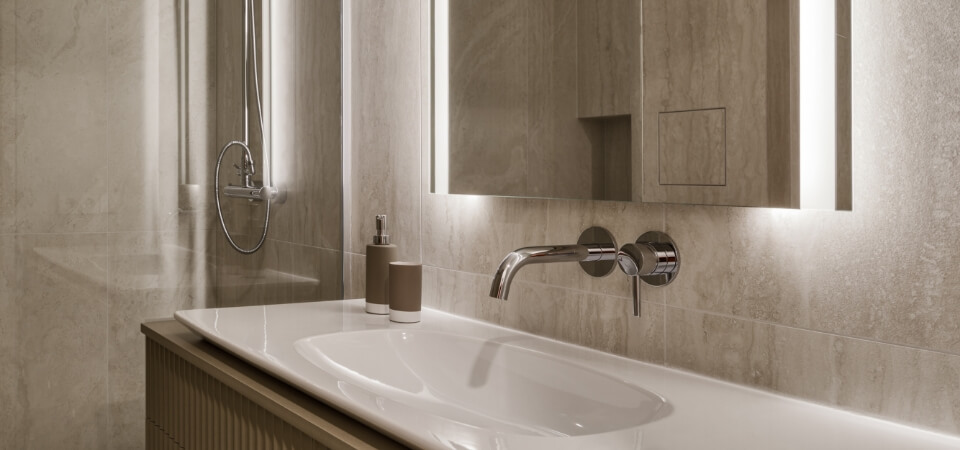
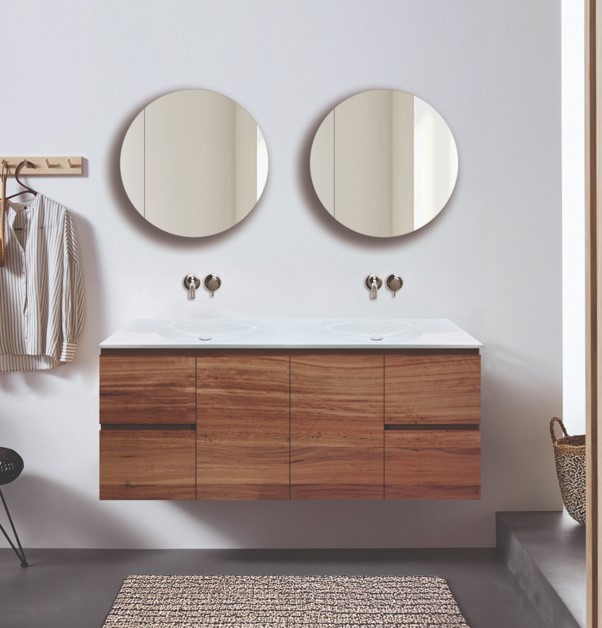
Choose a wall-hung vanity when floor space and a light, open look lead, as in a small bathroom or ensuite with in-wall plumbing. Choose freestanding when storage, a tighter budget or existing floor plumbing lead. Wall-hung needs solid blocking behind the wall; freestanding hides the pipes and usually costs less to fit.
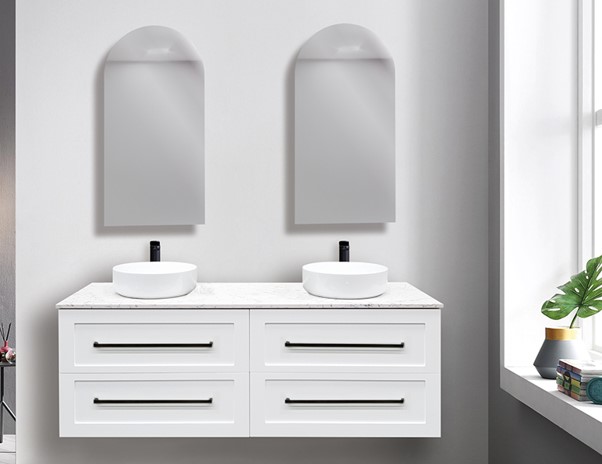
The difference between a wall-hung and a freestanding vanity comes down to how each one meets the room. A wall-hung vanity, also called a hung vanity or floating vanity, fixes to the wall and leaves the floor clear underneath. A freestanding vanity, or floor stand vanity unit, rests on the floor on a plinth, kickboard or legs and hides the pipework behind its base. Both are the same core vanity unit, a cabinet holding a basin and your daily storage.
Because a wall-hung unit floats, it shows the floor and reads light, so it suits small bathrooms, ensuites and modern schemes. Because a freestanding unit reaches the floor, it holds more and sits over existing plumbing, so it suits family bathrooms, tighter budgets and classic rooms. The right choice depends on available space, storage needs and existing plumbing.
Wall-hung wins here, because of the strip of floor you can see underneath it. When the tiles run unbroken from wall to wall, the floor reads as open and the room feels wider. In a small bathroom or a narrow ensuite, where every bit of floor space counts, that visible floor is one of the simplest space-saving choices available. A compact 600mm or 750mm wall-hung unit leaves even more tile on show.
The effect only works when the floor under the cabinet actually shows. Cram the unit into a tight corner, pile baskets underneath, or lay dark tiles that swallow the light, and the effect is lost. A freestanding unit positioned away from a busy wall can achieve a similarly open feel. Wall-hung is generally the safer choice for making a small room feel larger, but only when the floor beneath it stays clear.
Yes, a little. Match two vanities of the same width and the freestanding one holds more, because its cabinet reaches the floor and uses the low zone a floating unit leaves empty. That bottom band, roughly the last 150–200mm of height, is the storage capacity traded for the open floor.
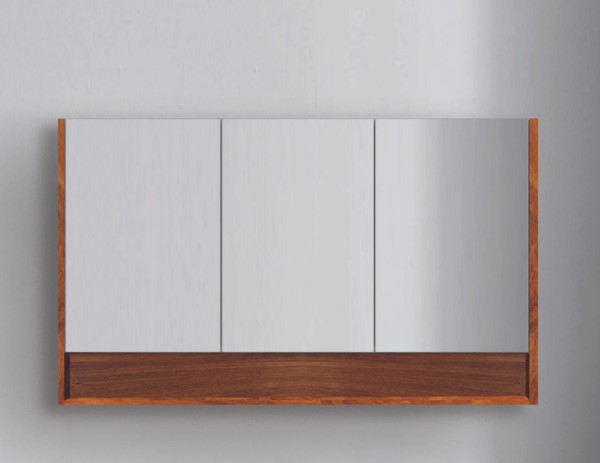
The difference is smaller than it first appears once the internal space is planned properly. Drawers are more efficient than a single deep cupboard for reaching items at the back, and a drawer shaped to step around the waste pipe recovers space that’s otherwise unused. Storage can also be added above the vanity: an RF Bath shaving cabinet set into or onto the wall adds a mirror and a shelf of hidden space without touching the floor. Paired with well-planned drawers, a wall-hung unit can hold nearly as much as its floor-standing equivalent.
A wall-hung vanity needs wall blocking because every kilo of it, the cabinet, benchtop, basin and a full sink of water, hangs off the wall, and plasterboard alone can’t carry that load. Before the sheeting and tiles go on, the installer fixes timber blocking, short lengths of solid timber often called noggins, between the studs behind where the vanity will sit. Without this reinforcement, a loaded cabinet can work its fixings loose over time, sag, and crack the surrounding tiles.
The plumbing follows the same logic. To keep the floor clear under a floating unit, the waste and water are roughed into the wall structure rather than the floor, work best done while the wall is open. A freestanding unit doesn’t require this. The floor takes the weight, so there’s no blocking and no structural work involved in installation, and it sits over pipes that already come up through the floor. That makes it the more straightforward choice in a cosmetic update where the walls stay shut.
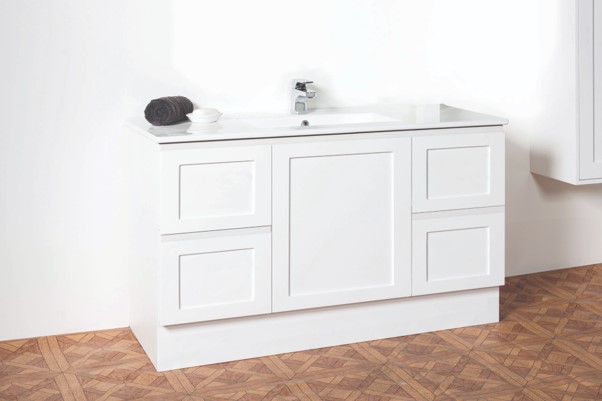
Usually yes on installation, and that’s where the real difference sits. The cost splits into two parts: the price of the unit, and the cost of fitting it. On the unit itself, wall-hung and freestanding overlap; both are available at a range of price points, so the unit cost rarely decides it.
Installation is where freestanding is generally cheaper. It requires no in-wall blocking, no pipes relocated into the wall, and less installation time, so the labour cost on the quote is typically lower. It also sits over floor plumbing that’s already in place, so a plumber rarely needs to relocate anything. This makes freestanding the practical choice for a budget renovation or a quick refresh, where moving plumbing would add unnecessary cost. Wall-hung is a better fit when the walls are already being opened up, since the extra blocking and in-wall plumbing cost far less to add mid-renovation than to retrofit later.
Each type has a different cleaning advantage. For floor cleaning, wall-hung has the edge: with nothing touching the tiles, the mop passes straight underneath, and no water pools against a base to cause damage over time. That open floor is a genuine weekly saving on bathroom cleaning. The trade-off is that the underside of the cabinet and the brackets are exposed to dust and occasional splashes, so they require regular wiping.
Freestanding works differently. The solid kickboard hides the pipes and prevents items rolling underneath, keeping the look tidy, but the same kickboard can trap grime along its base and in the corners. Water-resistant boards are recommended, as a soaked kickboard can swell over time. Both types require a similar overall level of maintenance, just in different areas.
Generally, wall-hung suits modern schemes and freestanding suits classic ones. A floating unit’s clean line under the cabinet suits a minimalist, pared-back design, allowing the basin and tapware to stand out as features. A floor-standing unit with a plinth or turned legs suits a classic design, a Hamptons-style room or a period bathroom.
This is a general guide rather than a fixed rule, as finishes and fittings can shift either style. A warm timber-look front softens a modern floating unit, while a crisp white front with a slim stone benchtop gives a freestanding unit a more contemporary feel. The benchtop and basin also influence the overall look: a thin engineered top with an undermount basin creates a sleeker appearance, while a thicker top with an above-counter basin adds a more substantial presence. The mount should generally suit the bathroom’s architecture first, with the finish, benchtop and basin used to refine the style further.
In a busy family bathroom, wear tends to show up in different places depending on the type, and this, more than the material itself, determines how well each vanity ages. A wall-hung unit’s durability depends largely on its fixings and wall support. When mounted into solid blocking, it withstands years of regular use and loaded drawers; mounted into plasterboard alone, the fixings can loosen over time, requiring repair. A freestanding vanity distributes its weight onto the floor, making it more tolerant of general wear, but its base sits within the splash zone. A kickboard exposed to standing water, or a leg exposed to moisture, is the most common point of failure, so a water-resistant base is recommended. Overall durability depends on the fixings for wall-hung units and the base material for freestanding ones.
Choosing the right vanity comes down to four key factors:
Matching the mount to these factors will generally determine the most suitable style.
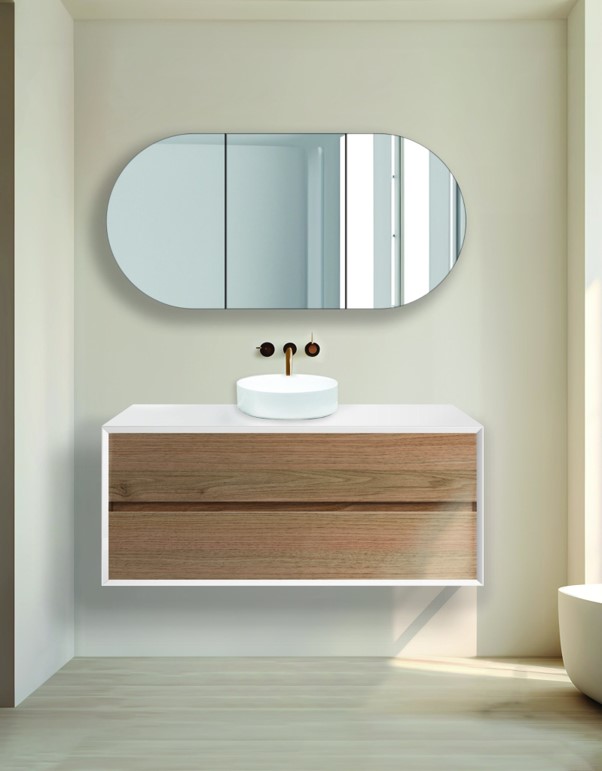
Wall-hung is generally better suited when the room is small or an ensuite, plumbing is or can be run through the wall, storage needs are light, and a modern, open look is preferred. Freestanding is generally better suited when a family needs maximum storage, plumbing already comes up through the floor, the budget is limited, or the room has a classic style. Where these factors conflict, the fixed elements, such as plumbing location or budget, should take priority over style preferences, since these are harder to change. Some homes use a combination, a wall-hung unit in the ensuite and a freestanding unit in the main bathroom. The table below summarises which type suits each factor.
| Your situation | Leans wall-hung | Leans freestanding |
| Floor space | Small bathroom or ensuite | Larger, wider room |
| Storage capacity | Light, tidy needs | Heavy family storage |
| Plumbing location | In-wall rough-in | Comes up through the floor |
| Budget | Walls already open | Tight, or a quick refresh |
| Cleaning priority | Easy floor mopping | Pipes hidden tidily |
| Who uses it | One or two adults | The whole household |
A floating vanity is another name for a wall-hung vanity: it fixes to the wall and leaves the floor clear underneath, so the pipework stays hidden inside the wall. A freestanding vanity rests on the floor on a plinth, kickboard or legs, and sits over plumbing that comes up through the floor. Both serve the same function; the difference is whether the unit is mounted to the wall or stands on the floor.
There are three main considerations. It offers slightly less storage than an equivalent freestanding unit, as it does not use the lowest section of cabinet space. It requires solid timber blocking behind the wall and plumbing routed into the wall, which adds installation work and cost, particularly in a cosmetic renovation. Its underside and brackets are also more exposed to dust and require regular cleaning. These factors are manageable with proper planning.
A freestanding vanity does not hang from the wall the way a wall-hung unit does, since the floor carries its weight. However, it is recommended to secure a freestanding vanity to the wall with a bracket or screws through the back rail. This prevents rocking or tipping when a drawer is pulled, and helps seal the join at the wall against splashes, adding extra stability.
A wall-hung basin or vanity relies on its fixings, so it must be anchored into solid blocking or studs rather than bare plasterboard, or it can work loose under regular use. It typically offers less below-basin storage than an equivalent floor-standing unit, and its exposed underside requires regular cleaning. Repairing or relocating in-wall plumbing later also requires opening the wall. Proper fixing and plumbing planning at the outset addresses most of these considerations.
There is no single fixed height, which is one of the advantages of a wall-hung design. Australian bathrooms often set the benchtop somewhere within an 800mm to 900mm band, and because a wall-hung unit is fixed at installation, the height can be adjusted for tall adults, children or wheelchair users. A freestanding unit has a fixed height. The intended users of the room should inform the mounting height.
When choosing between a wall-hung and freestanding vanity, RF Bath manufactures both standard and made-to-order sizes, across the Mode and Vanity ranges, built in Dandenong South, Victoria, sold through independent showroom stockists rather than direct. Search your postcode to find the nearest stockist and see the two side by side before deciding.
Choosing the right bathroom vanity for your home often comes down to how it looks in the showroom and how you imagine it will look in your home. However, the material that it is made of is just as important as how it looks. This piece of furniture will be in a high-traffic area and […]
What Matters More Than The Vanity Material in a Wet Bathroom? Walk into any bathroom after a hot shower and you feel what the vanity has to live with: warm, wet air that lingers for hours. In a humid Australian bathroom, that daily steam wears a vanity down more than the label on the material […]
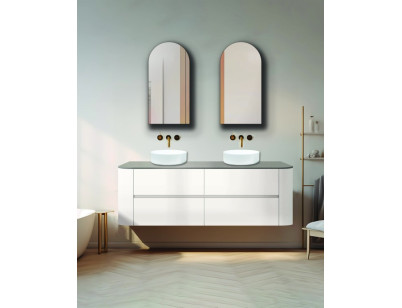
Getting bathroom vanity sizes right in Australia comes down to more than the wall length, it’s decided by depth, door clearance and plumbing set-out too. Which of the six standard vanity widths fits your bathroom? Width is where nearly everyone starts when working out bathroom vanity sizes, because it has to fit the wall. It’s […]
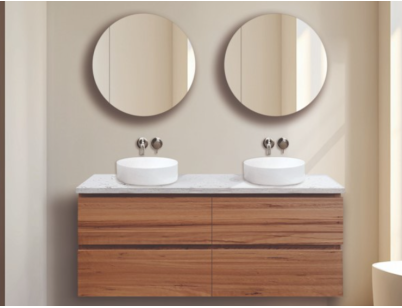
A vanity sets the tone for the whole bathroom. It is the centrepiece, the talking point, and the first thing people notice when they enter your bathroom. Sometimes off-the-shelf options don’t fit into awkward corners or non-standard bathroom shapes, or ensuites which have been squeezed between bedrooms and wardrobes. This is where custom made vanity […]